
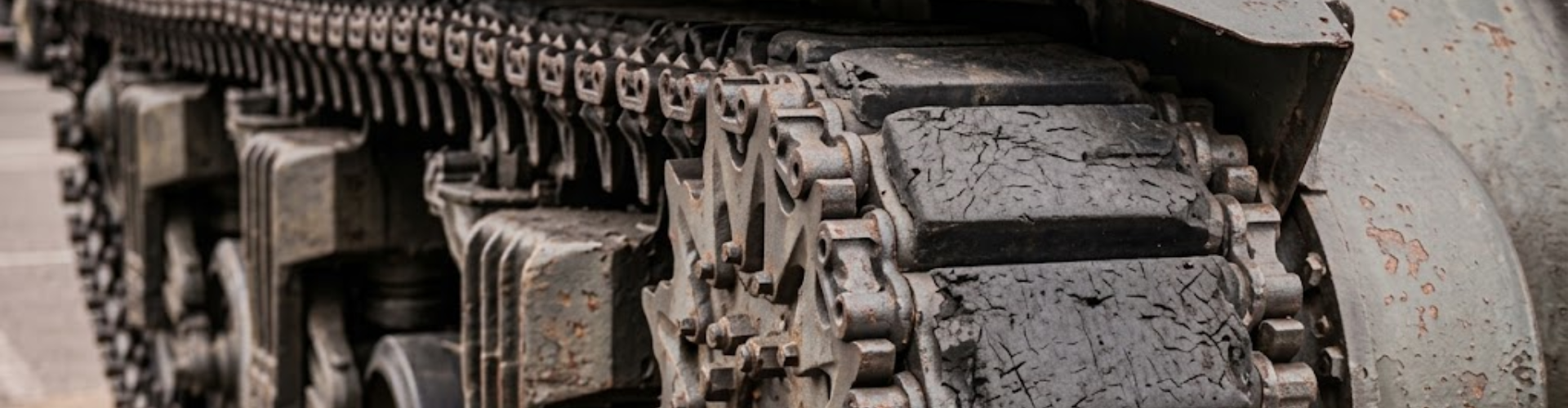
Additive manufacturing (AM), commonly known as 3D printing, is transforming the defense industry by enabling faster production, improved design flexibility, and more resilient supply chains. Unlike traditional subtractive manufacturing methods that remove material to create parts, additive manufacturing builds components layer by layer directly from digital designs. Modern 3D printing technologies such as Selective Laser Sintering (SLS), Direct Metal Laser Sintering (DMLS), and Fused Deposition Modeling (FDM) allow defense manufacturers to produce complex geometries, lightweight structures, and high performance components with reduced material waste. From advanced weapons systems to battlefield medical devices and on demand spare parts, additive manufacturing is becoming a critical technology for modern defense operations.
When viewed from a broader perspective, additive manufacturing is significantly reshaping the defense industry. Technologies such as Selective Laser Melting, Direct Metal Laser Sintering, and Binder Jetting are enabling defense agencies and manufacturers to rethink how weapons systems, components, and mission critical equipment are designed, produced, and delivered. By moving beyond conventional manufacturing limitations, additive manufacturing offers greater flexibility, efficiency, and innovation across defense production environments.
Transitioning from traditional manufacturing methods to additive manufacturing provides several strategic advantages, including:
Cost optimization: Reduced tooling requirements, minimized material waste, and more efficient production processes help lower overall manufacturing costs.
Improved design capabilities: Engineers can develop complex geometries, lightweight lattice structures, and topology optimized components that enhance performance and durability.
Faster delivery to the end user: On demand manufacturing and rapid prototyping shorten production cycles, enabling quicker deployment of critical components and systems.
Enhanced technical and commercial competitiveness: Organizations adopting additive manufacturing can accelerate innovation, improve product performance, and maintain a stronger competitive position in advanced defense technologies.
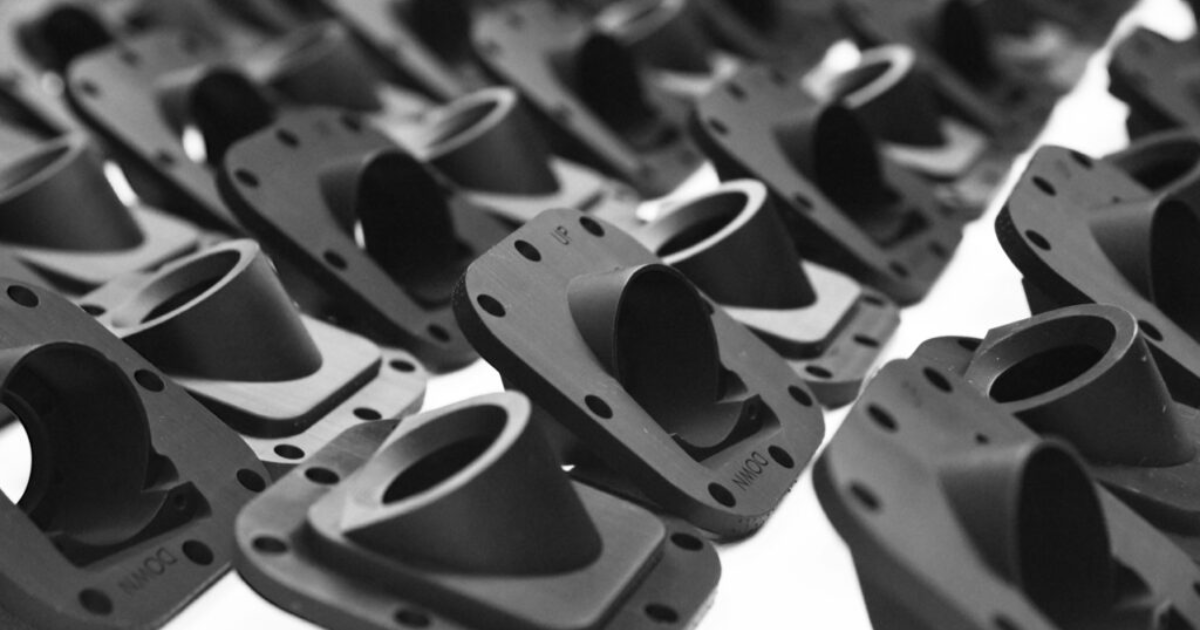
Many defense systems remain in service for several decades, making the availability of replacement parts a persistent challenge. Conventional manufacturing processes such as CNC machining or casting often require dedicated tooling, longer production lead times, and established supplier networks. In many cases, original tooling may no longer exist, or the suppliers that produced specific components may have discontinued production, making spare parts difficult and costly to obtain.
Additive manufacturing provides a practical solution through digital inventory management and on demand production. Using advanced 3D scanning and reverse engineering techniques, obsolete or damaged components can be digitized, converted into accurate 3D CAD models, and reproduced using metal or polymer 3D printing technologies. This approach allows defense organizations to standardize part manufacturing internally and produce components whenever they are required.
Additive manufacturing has significantly expanded the possibilities for producing military equipment by enabling manufacturers to work with a wide range of materials, including high performance polymers, composite materials, and advanced metal alloys. Modern 3D printing technologies allow engineers to develop components with improved strength to weight ratios, complex geometries, and optimized structural performance that are difficult to achieve using traditional manufacturing methods.
Because additive manufacturing supports multiple materials and production techniques, it can be applied across a broad spectrum of military equipment manufacturing and component development. The technology is particularly valuable for producing lightweight structures, customized components, and low volume specialized parts required in defense applications.
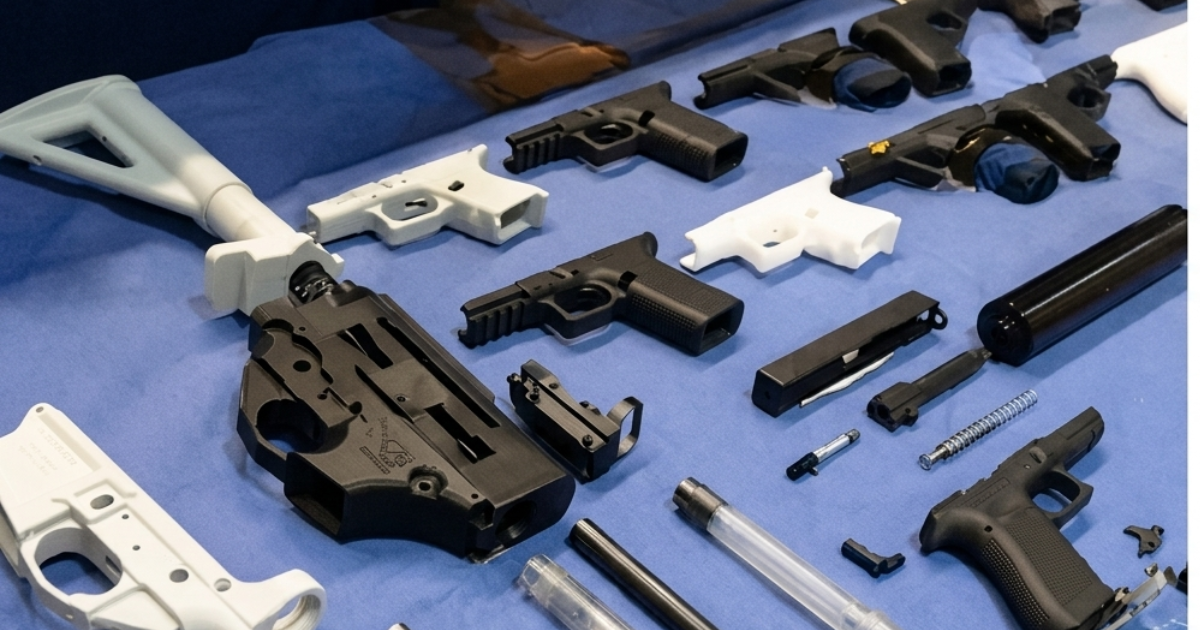
Military equipment and components that can be produced or supported through additive manufacturing include parts for small arms and weapon systems, protective gear such as body armor and helmet components, military uniforms and field equipment accessories, structural components for naval vessels and maritime systems, lightweight parts for military aircraft and aerospace platforms, components used in ground vehicles and armored systems, as well as specialized parts for artillery and other defense support equipment. By enabling rapid prototyping, design optimization, and flexible production capabilities, additive manufacturing helps defense manufacturers improve equipment performance, shorten development timelines, and enhance overall operational readiness.
Additive manufacturing is playing an increasingly important role in advancing military medical support and battlefield healthcare. With the capability to produce highly customized medical solutions, 3D printing enables medical teams to create patient specific devices quickly, even in remote or field hospital environments.
Using digital medical imaging data and advanced design tools, healthcare professionals can develop tailored medical components that address the specific needs of injured personnel. This approach improves treatment precision while reducing the time required to produce critical medical devices.
Key applications include:
By enabling rapid production of personalized medical solutions, additive manufacturing enhances battlefield medical response, surgical accuracy, and rehabilitation outcomes for injured service members.
Modern metal additive manufacturing technologies can process high strength materials such as titanium alloys, aluminum alloys, stainless steel, and nickel based superalloys. These materials are widely used in aerospace and defense due to their strength, heat resistance, and durability.
This capability allows manufacturers to produce mission critical components such as turbine parts, structural brackets, heat exchangers, and specialized tooling. As additive manufacturing technologies continue to advance, more certified parts are being used in operational defense systems.
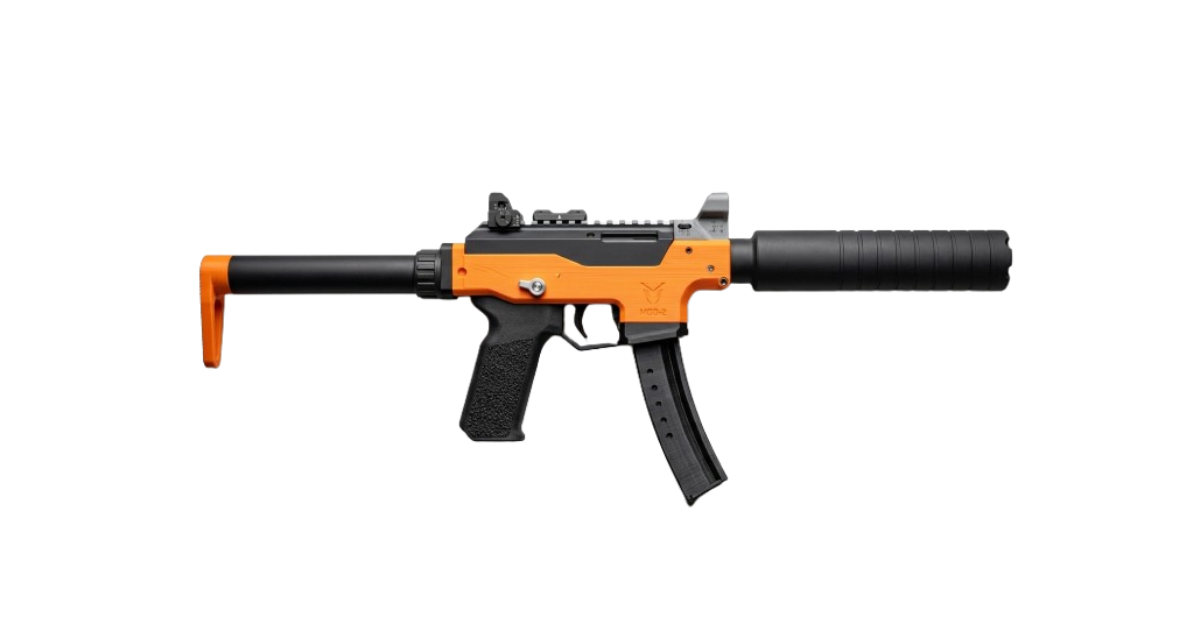
Modern defense operations demand rapid deployment capabilities and highly adaptable logistics. Metal additive manufacturing technologies enable defense organizations to produce spare parts and mission critical components on demand, reducing dependence on complex and often vulnerable global supply chains. In remote operational environments, the ability to manufacture components locally allows faster repairs, minimizes equipment downtime, and ensures that critical systems remain operational when they are needed most.
Additive manufacturing also provides a practical solution for maintaining aging military assets. Many legacy components are no longer produced by their original equipment manufacturers, making replacements difficult to obtain. Through digital part libraries and advanced metal 3D printing technologies, these discontinued components can be recreated quickly and cost effectively, eliminating the need for extensive reverse engineering or expensive conventional machining processes. As a result, defense organizations can improve fleet readiness, maintain operational continuity, and extend the service life of critical defense systems.
Technology has played a pivotal role in the war in Ukraine. In addition to conventional weaponry supplied by Ukraine and international allies, a wide array of simpler 3D printed components has emerged on the battlefield. While large scale military hardware such as artillery and armored vehicles continues to be produced by industry, civilians have significantly contributed by designing and supplying 3D printed items to the Ukrainian Armed Forces. This effort is largely collaborative and community driven. One notable example is the volunteer led Druk Army, which reportedly delivered approximately 11 million 3D printed units equivalent to around 277 tons of material to the frontlines in 2024. Although detailed insights into logistics and supply chains remain limited, it is evident that both Ukrainian companies and independent contributors are actively supporting the military. Together, they form a decentralized, crowdsourced supply network.
Drones have become a defining feature of modern warfare in Ukraine, many of which incorporate 3D printed components. These include structural elements for rotary wing drones and modified payload systems, such as grenades equipped with 3D printed stabilizing fins. Over time, these innovations have evolved from simple add ons to fully developed systems, including improvised ammunition designed for platforms like the Baba Yaga drone.
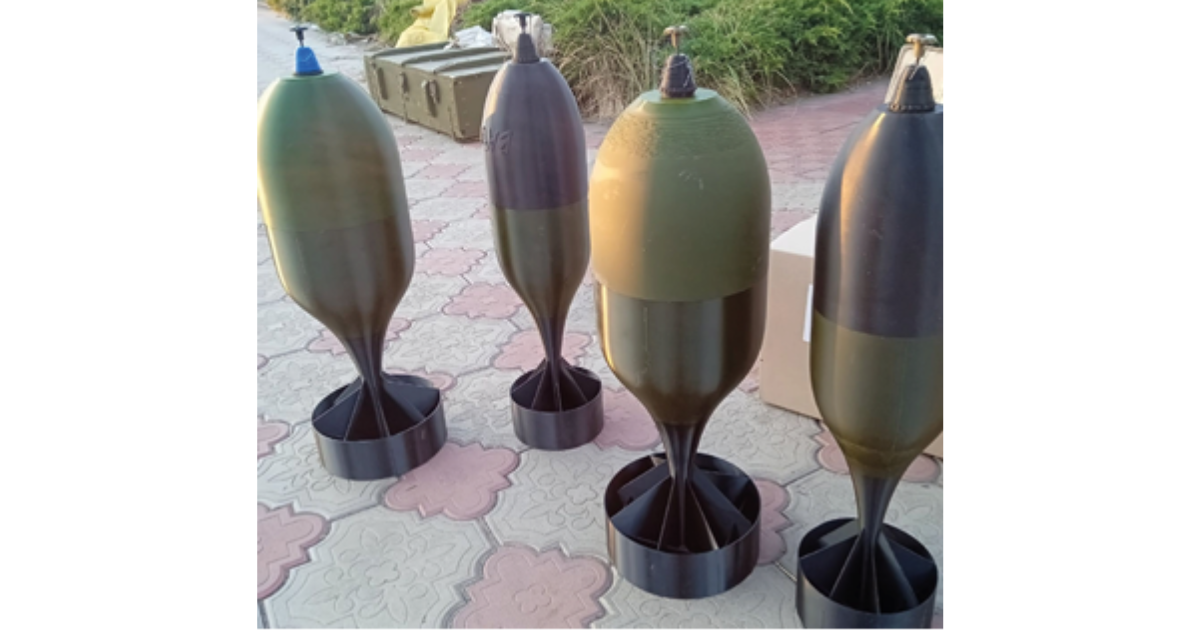
Such ammunition typically combines conventional explosives with 3D printed outer casings filled with shrapnel and fitted with modified fuses. The use of polymer shells reduces weight, thereby extending drone range and optimizing explosive efficiency. Other improvised devices include anti personnel mines with 3D printed casings, designed for rapid assembly and deployment near combat zones. Reports also suggest the use of 3D printed drone mounted systems capable of dispersing multiple PFM-1 butterfly mines during flight, effectively transforming drones into mobile minelaying units.
Despite these advancements, the extent of standardization and widespread adoption of such designs remains unclear. Most applications appear to be adaptive and situational rather than uniformly implemented. Additionally, while desktop 3D printing enables rapid, low cost production, concerns around material fragility and handling safety limit its use in conventional arms manufacturing. Brittle polymer shells, while effective in maximizing explosive impact, pose risks during production, transport, and deployment. Overall, polymer based 3D printing has become a distinctive element in the supply of military materials in Ukraine. It reflects a shift from improvised, necessity driven solutions to increasingly organized and professionalized innovation. While a comprehensive assessment of their military effectiveness requires further data, it is evident that additively manufactured components are now integrated into operational systems and are being utilized by both Ukrainian and Russian forces for tactical and lethal purposes.
Source: Adapted from Liska Suckau, Additive Manufacturing in the Military Technology Sector, with references to Counter offensive Pro (2025), The Armourer’s Bench (2024), and Linn (2025).
As defense organizations continue to adopt advanced manufacturing technologies, additive manufacturing is emerging as a critical enabler of innovation, efficiency, and operational readiness. Its ability to produce complex components, manufacture replacement parts for legacy systems, support battlefield medical applications, and strengthen supply chain resilience makes it highly valuable across multiple defense domains. By enabling on demand production, material optimization, and rapid design iteration, additive manufacturing helps defense manufacturers improve equipment performance while reducing production time and logistical challenges. As the technology continues to evolve, it is expected to play an increasingly important role in shaping the future of defense manufacturing and military capability.
© 2026 RA Global Tech Solutions
Site design and developed by Rajkar Global