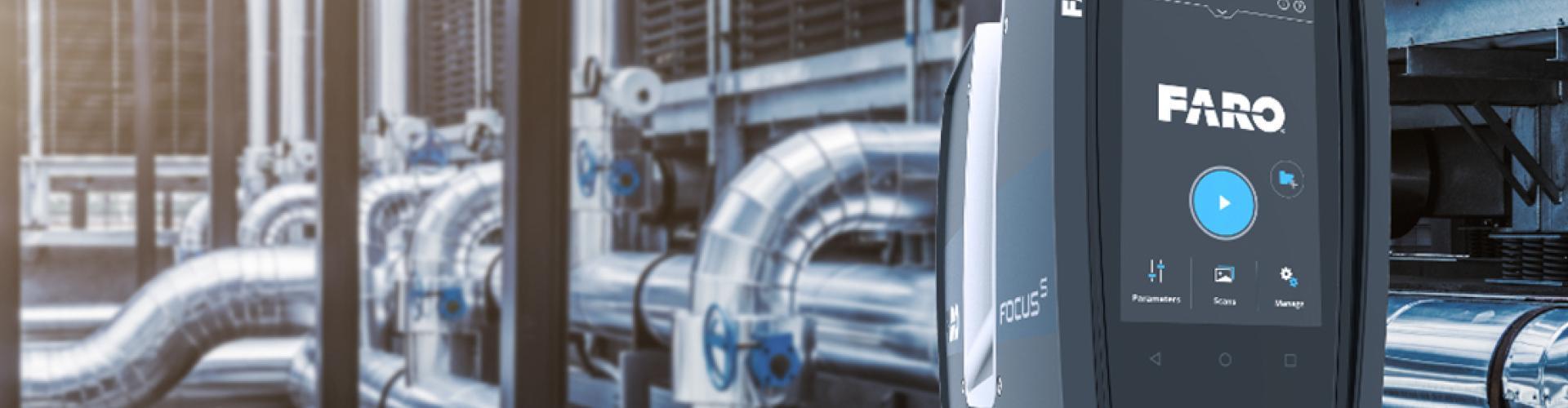
3D laser scanning technology has completely changed how industries collect, analyze, and interpret physical data. Whether it is applied to engineering, manufacturing, construction, or even preservation, 3D laser scanning provides unmatched accuracy and efficiency when mapping intricate geometries. As industries increasingly adopt this advanced technology, it's clear that 3D laser scanning is becoming a key tool for many professionals worldwide.
At its core, 3D laser scanning is a process that uses 3D lasers to capture a physical object’s shape, dimensions, and spatial orientation in high detail. The technology works by emitting a 3D laser source onto an object and measuring the reflection to generate thousands or even millions of precise data points. These points are then compiled to create a point cloud, which is a highly accurate digital representation of the 3D scanned object or environment.
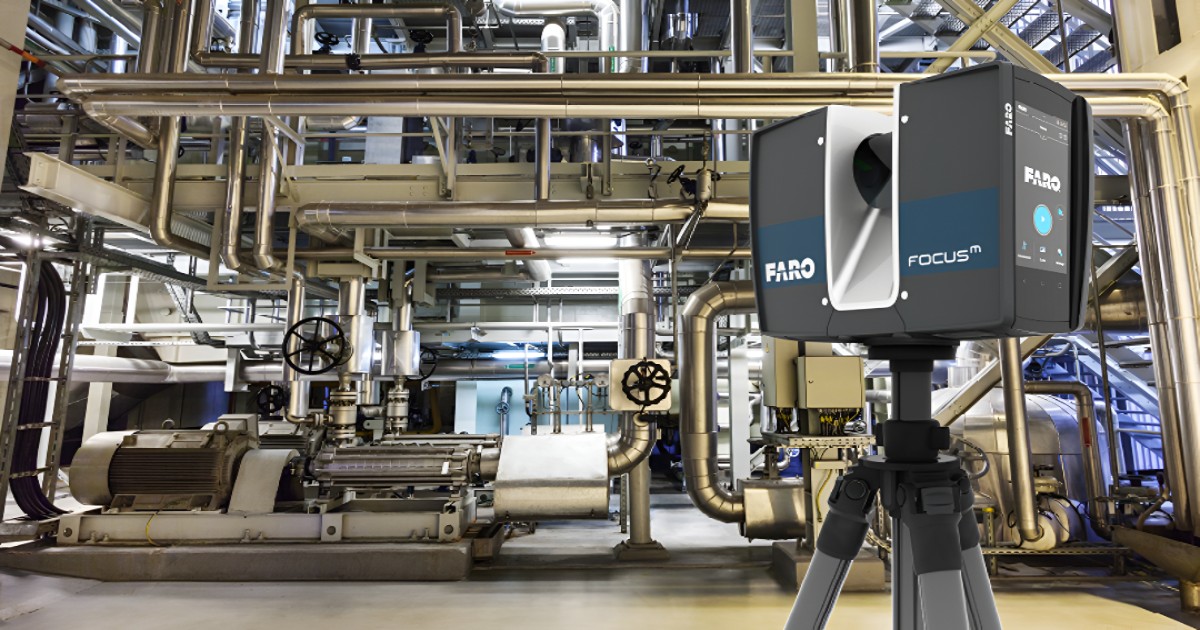
Precision and preciseness: The great accuracy offered by 3D laser scanning is among its most important benefits. Human error is frequently a possibility with traditional methods of mapping and measuring objects, but 3D laser scanning removes this issue. Even the smallest details can be captured by the technology, guaranteeing accurate measurements that are crucial for projects that need precise specifications.
Efficiency in data collection: 3D laser scanning is incredibly efficient when it comes to collecting large amounts of data in a short time. In industries where time is of the essence, such as industrial design and construction, this is particularly helpful. As opposed to the hours or days that manual measurement typically takes, it can be finished in a fraction of the time without compromising accuracy.
Architecture and construction: Used for designing blueprints or retrofitting projects.
Manufacturing: Helps in reverse engineering parts or ensuring product quality.
Cultural heritage: For preserving historical monuments and artifacts.
Healthcare: Assists in creating custom prosthetics or anatomical models.
3D Scanning the object or environment: The 3D laser scanner is set up at a fixed location. After that, it starts to shoot laser beams that move over the target object. A data point is gathered each time the laser strikes a surface, depending on the angle and distance of the reflection.
Creating a point cloud: As the 3D scanner moves, it gathers millions of these points, creating a point cloud. This cloud forms a highly detailed, three-dimensional digital model of the 3D scanned object or environment.
Post-processing and analysis: Once the point cloud is generated, it is transferred to specialized software where it can be manipulated for various uses. Engineers, architects, or designers can then analyze the model for any necessary modifications or measurements.
Construction and architecture: In construction, 3D laser scanning is a valuable tool for designing and planning structures. It can swiftly map out expansive spaces or existing structures, giving construction teams access to extremely precise data. Errors are decreased, and improved project management is made possible.
Manufacturing and reverse engineering: 3D laser scanning plays a pivotal role in reverse engineering. By 3D scanning existing parts or prototypes, manufacturers can recreate designs, perform quality checks, or improve upon existing products. This is essential for industries like automotive or aerospace, where precision is key.
Preservation and restoration: For museums and cultural institutions, 3D laser scanning is an excellent tool for preserving historical artifacts. It allows for detailed replication and conservation of ancient buildings or sculptures, ensuring that cultural heritage is maintained for future generations.
In terms of accuracy, speed, and versatility, 3D laser scanning is simply superior to conventional measurement techniques like tape measures and digital calipers, which have been in use for centuries. Laser scanning is the more effective and dependable option for complex projects because it can collect data from hard-to-reach places and is less likely to make mistakes.
As technology evolves, 3D laser scanning is only expected to become more advanced. Innovations such as faster scanning times, improved portability, and integration with other technologies like artificial intelligence or augmented reality will likely make this technology even more indispensable across various industries.
In conclusion, 3D laser scanning is a useful tool in sectors like manufacturing, cultural preservation, and construction because of its many advantages. It is a worthwhile investment for businesses trying to streamline their operations and lower human error because of its quick turnaround time and capacity to provide accurate, comprehensive data.
If you want to use innovative techniques for your projects, think about utilizing 3D laser scanning to reach new levels of accuracy and productivity.
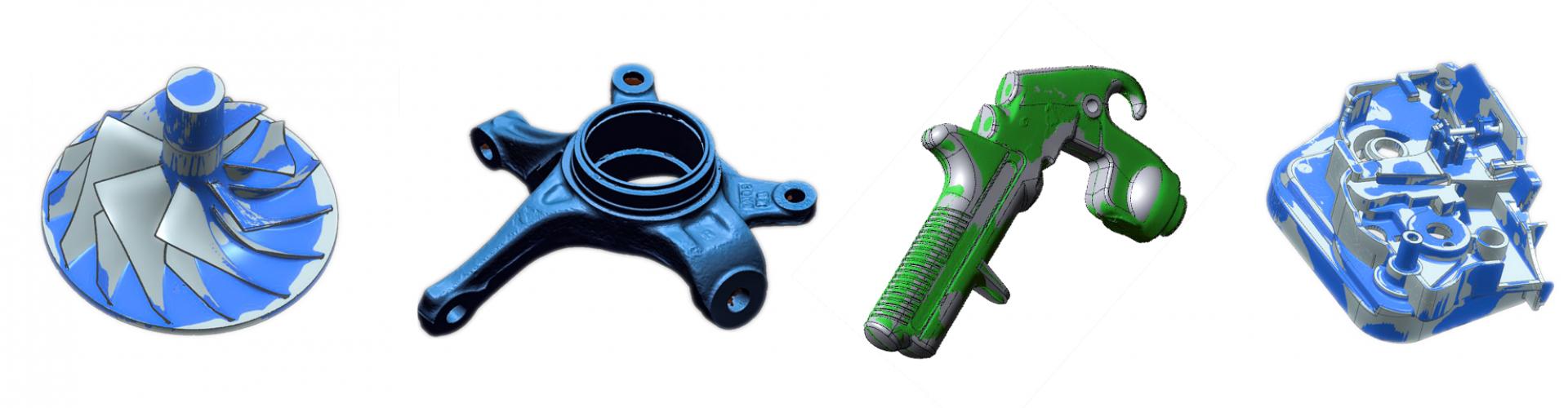
Improvement in previously designed products is required to increase the usability of certain products. Some products in current use were designed with no design data stored, such as their physical or digital drawings, to refer to for making advancements in current products in use. Some products with small and complex features and internal designs are difficult to observe or measure; with no digital data on design, it becomes difficult for design upgrades. In such cases, 3D reverse engineering services are crucial for product design improvement or new product development. 3D scanning and reverse engineering are impressive processes for improvement in product design or product development and play a vital role.
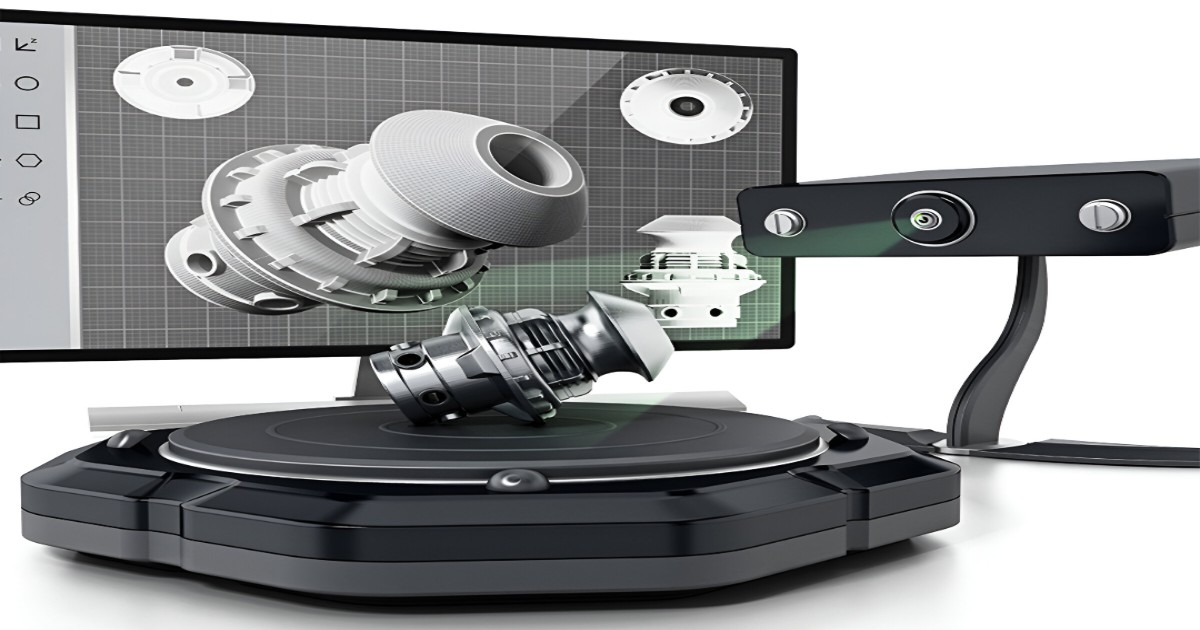
3D scanning is a process of analyzing a real-world object or an environment to collect data on its shape, color, and possibly its appearance. The collected data can then be used to construct digital 3D models.
The data obtained as the output is point cloud data, which is worked upon with various tools to obtain a solid 3D model. The 3D scanner has a somewhat characteristic feature of capturing the shape and color data of the objects.
In most cases, multiple 3D scans are required for products from different angles to collect data on their shapes from different sides, and these scans are combined to give actual point cloud data of an object, which replicates the shape of an object or makes some modifications in the product design to develop a new product out of it.
The common applications of this technology include product design or development, manufacturing, augmented reality, motion capture, gesture recognition, robotic mapping, industrial design, orthotics, and prosthetics. Reverse engineering and prototyping, quality control/inspection, and digitization of cultural artifacts are some of its other applications. These data are extensively used in the entertainment industry in the production of movies and video games, including virtual reality.
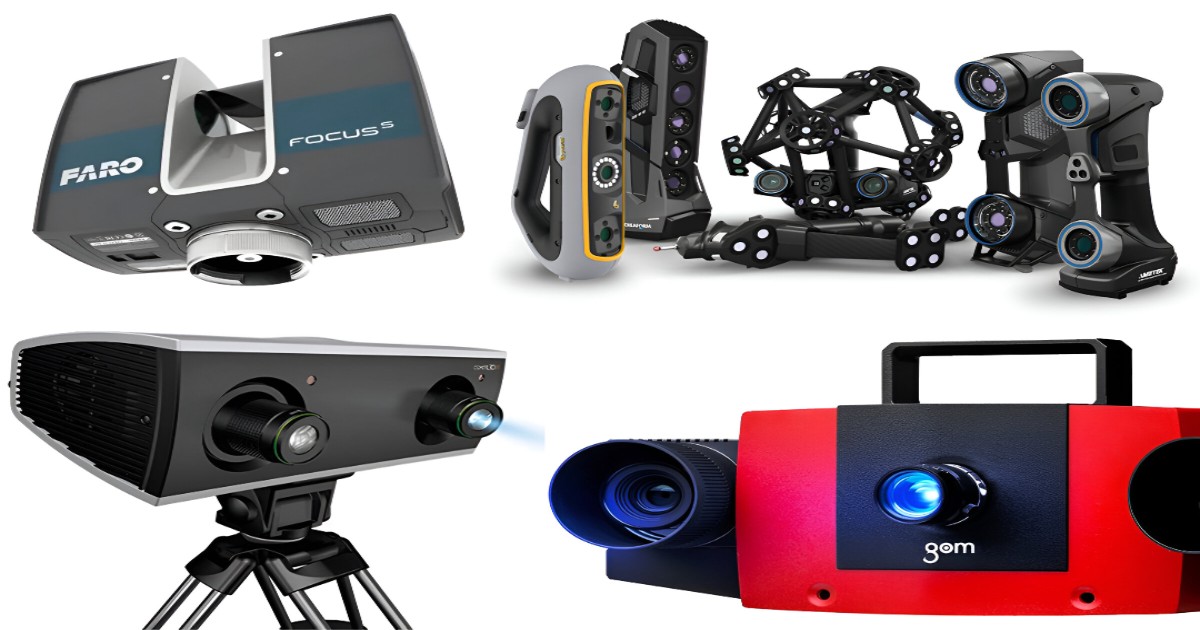
The type of scanning technique to be used depends on product size, the complexity of design, and the accuracy of output required. The accuracy of the 3D scanner for general-purpose use is 0.01mm to 0.1mm. 3D scanners can be contact types, like probe-based, or non-contact types, like portable and handheld 3D laser scanners.
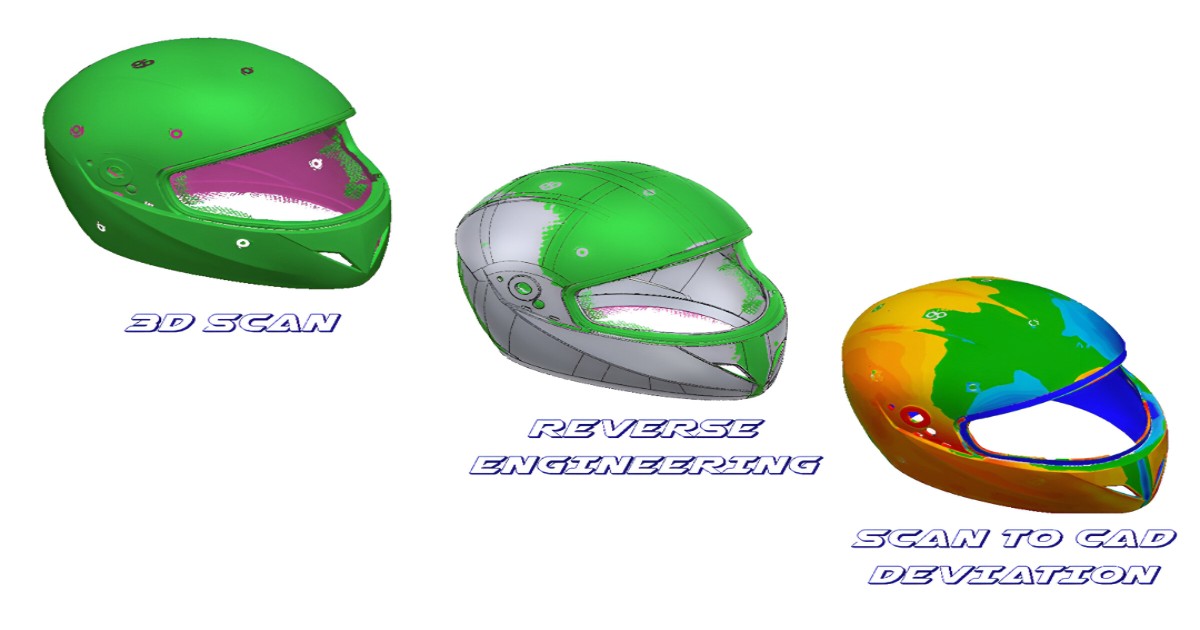
The point cloud data obtained through 3D scanning is not of much use until the solid model based on the data is constructed using reverse engineering services. The STL format point cloud data is cleaned for the noise with unwanted data removed, and the data is aligned with the surface for ease of various operations to create a solid 3D model. Various textures and colors can also be captured by 3D scanning and modeled accordingly to replicate the available solid product. This technique helps in easing the measurement task on a product that is difficult due to its size or its location.
© 2026 RA Global Tech Solutions
Site design and developed by Rajkar Global