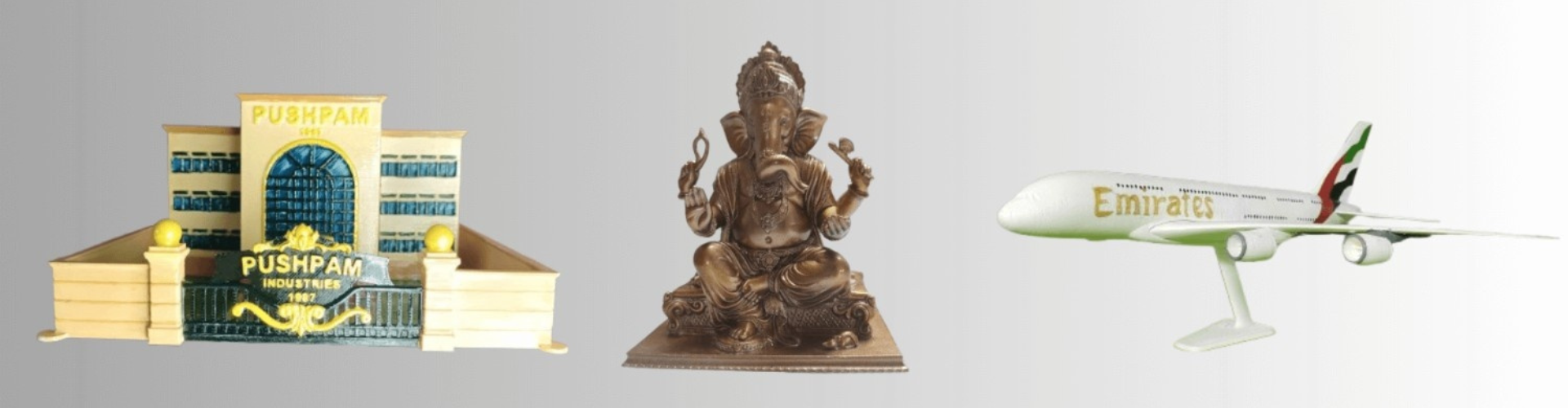
Miniature model, a more manageable version of something much bigger in your hands, has an unexpectedly appealing quality. Thus, a scaled-down model does just that: it transforms an imaginary world, data, and design into something you can immediately see, touch, explain, and understand. However, its uses go well beyond aesthetics; miniature model-making is becoming increasingly useful in all spheres of life, enabling people to test ideas early on, communicate ideas more effectively, and most importantly, make better decisions and reduce the product manufacturing time.
Making miniature models is not just about craftsmanship; it’s also about storytelling, acknowledging, precision, and purpose.
What is miniature model making?
Miniature model making involves building replicas of objects, structures, or systems as physical models from which the final product is to be designed. These are highly detailed models that are made to scale with the design's form, proportions, and functionality based on the original design.
Historically, miniatures were made by hand out of wood or clay, sometimes foam. Nowadays, these options have been highly broadened by modern technologies such as 3D modeling and 3D printing, laser cutting, and CNC machining, which have significantly broadened the options available, leading to more precise models, increased production speed, and even geometries that were previously unattainable.
Process for Creating Miniature 3D Models
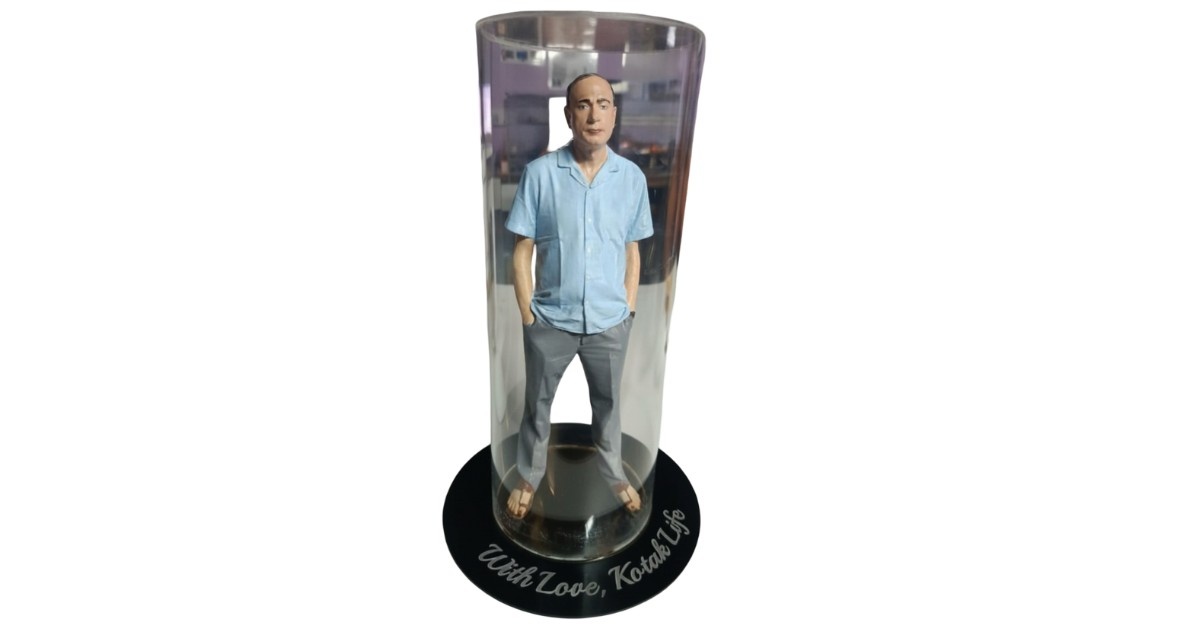
3D Design and Modeling: The entire process begins with 3D digital product design, 3D scanning, 3D laser scanning, or sculpting 3D software for real-life figures. The designers are able to create 3D designs with the minutest detail with the desired mechanism to analyze the critical functionality of the model or aesthetic of the product.
File Preparation: After being designed, the 3D model will be exported into .step, .STL, or .OBJ format. The slicing software will slice it into layers for 3D printing of the miniature model. Designers can scale their designs as per the desired sizes, change the height of layers for better detail, and create the support structures for overhanging sections.
Material Selection: A suitable choice of materials is essential for 3D printing. PLA, ABS, TPU, and PETG offer a good mix of flexibility and strength. Also, for resin printing, ABS, rigid, standard, and elastic are good options for functional parts and miniatures.
3D Printing Process: Two major 3D printing techniques have been adopted: The FDM printing process involves filament in creating a model in layers with certain temperature settings at the nozzle. Cost-effective with a large model capability but may have visible layer lines. The SLA/DLP printing process involves using light liquid resin to solidify layers. Offers highly detailed, smoothed-out, and professional-quality 3D-printed miniatures and functional models, making this a great option for creating statues and functional parts with scaled-down/miniature size and actual prototypes.
Post-processing: Then, printer output models undergo additional processing in order to remove support structures, smoothen bodies with sanding or isopropyl alcohol for cleaning uncured resin, and apply primer layers. Further postprocessing, including acrylic painting, wash application, spray coating, metallization, and material filling, can be used to promote added depth and realism in the miniatures or real-size prototypes.
Key Applications of Miniature Model Making
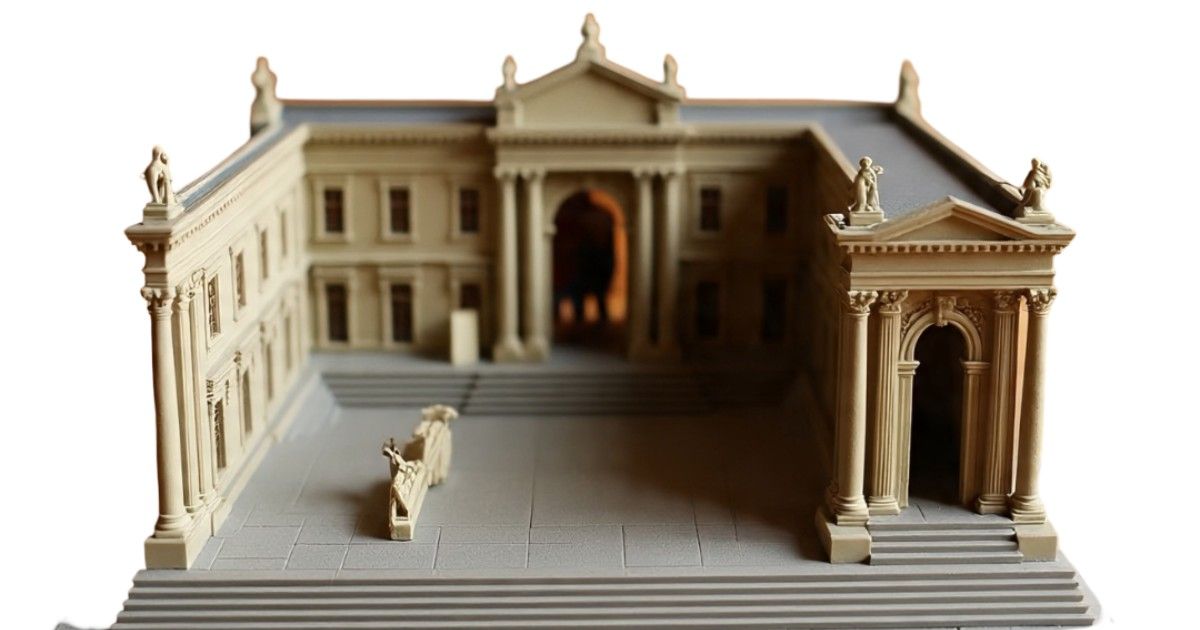
Urban planning and architecture: Miniature models are used by architects and planners to display infrastructure projects, townships, and building designs. These models make it easier for authorities, clients, and investors to comprehend scale, layout, and spatial relationships, which improves decision-making.
Manufacturing and Engineering: Miniature models are used in engineering for form and fit testing, prototyping, and design validation prior to mass production. By spotting problems early in the design process, they lower development risks, save money, and enhance product quality.
Marketing and Product Design: Miniature copies are used by product designers to assess functionality and aesthetics. Scaled models draw attention, provide clear explanations of product features, and improve customer engagement in marketing and exhibitions, particularly for large or complex products.
Training and Education: Miniature models are effective teaching tools used by educational institutions. Through visual and practical learning, they make complicated theories, machinery, and structures easier for students to understand.
Gaming, entertainment, and collectibles: Film, animation, video games, and collectibles all make extensive use of miniature models. Miniatures, which range from intricate figurines to game characters and movie props, realistically and imaginatively bring fictional worlds to life.
Cultural Heritage and Museums: Miniature models are used by museums to replicate historical locations, monuments, and artifacts. These models allow visitors to learn about history in an interesting, simple-to-understand format while also preserving cultural heritage.
Conclusion
Making 3D miniatures, 3D-printed parts, or prototype models is a potent tool that bridges the gap between technology, creativity, and real-life experience. It is essential to contemporary design and communication because of its applications in architecture, engineering, education, marketing, and industrial design. The impact and potential of 3D miniature or 3D printing models will only increase as digital design and 3D printing technologies advance
RA Global Tech Solutions has successfully delivered over 2000 miniature models across diverse sectors, including medical, gaming, and artifacts. Additionally, we support manufacturing batches for real-life applications. At RA Global Tech Solutions, 3D-printed functional models have been supplied to clients in Muscat, the United Kingdom, and the UAE.