
Inspection plays a critical role in modern manufacturing by ensuring that components meet required design specifications, dimensional tolerances, and quality standards. In industries such as automotive, aerospace, medical devices, and defense, even a small dimensional deviation can lead to assembly problems, reduced product performance, or system failure. Therefore, inspection is essential for verifying dimensional accuracy against 3D CAD models, validating geometric dimensioning and tolerancing (GD&T), detecting manufacturing defects, and maintaining overall process quality. As product designs become more complex and tolerances become tighter, traditional inspection methods are gradually being replaced or supported by advanced digital metrology technologies such as 3D scanning, coordinate measuring machines, and industrial CT scanning.
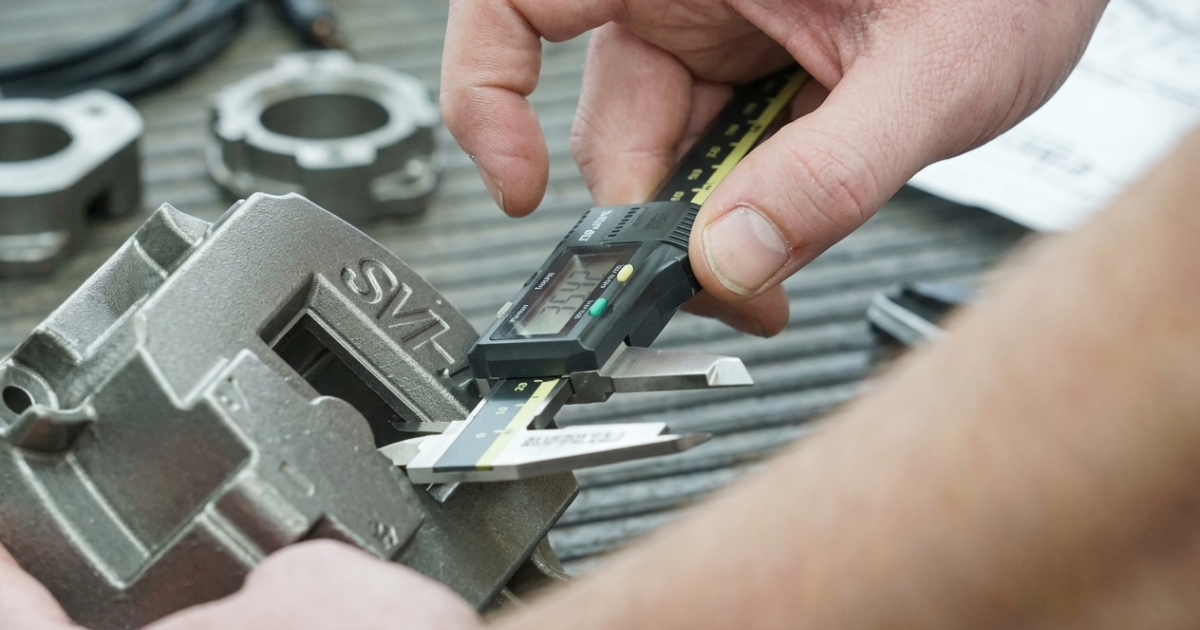
Traditional inspection methods such as vernier calipers, micrometers, gauges, and manual templates have been widely used for decades. While these tools are useful for basic dimensional measurements, they present several challenges when applied to complex or high precision components. One of the main limitations is their inability to measure complex geometries or freeform surfaces accurately. These methods usually capture only a few measurement points rather than the complete geometry of the part. Additionally, the inspection process can be time consuming because measurements are taken manually and often require multiple setups. Another challenge is inconsistency in measurement results, as the outcome may depend heavily on the skill and experience of the operator. Traditional inspection also lacks digital data output, making it difficult to generate detailed inspection reports or deviation maps. Furthermore, these methods cannot inspect internal features or hidden defects within components. Due to these limitations, industries increasingly rely on advanced inspection technologies to achieve higher accuracy and efficiency.
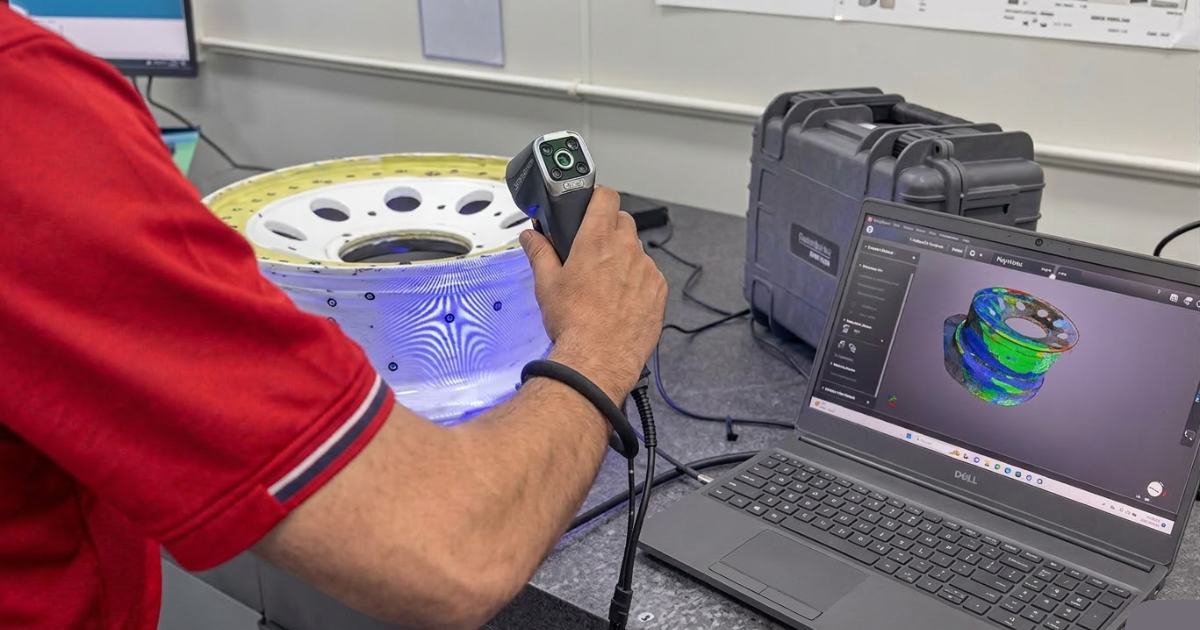
3D scanning has become a widely adopted inspection technology for capturing the full surface geometry of a component. This method uses structured light or laser scanning to capture millions of measurement points and generate a digital 3D model of the part. The typical inspection accuracy of a 3D scanner ranges up to about 20 microns, depending on the scanner type, resolution, and part size. The major advantage of 3D scanning is its ability to inspect complex geometries quickly while capturing the entire surface of the component. It also enables engineers to generate full color deviation maps that visually show differences between the scanned part and the original 3D CAD design.
Because of its speed and flexibility, 3D scanning is widely used for reverse engineering, rapid inspection, and product development. However, 3D scanning also has certain limitations. Its accuracy is generally lower than that of high precision CMM systems, and scanning results can be affected by reflective or transparent surfaces. In some cases, surface preparation such as applying scanning spray may be required. Human errors can also occur if the operator performs incomplete scans, uses incorrect alignment during data processing, or fails to properly calibrate the scanner.
The inspection performance of the blue laser light 3D scanner demonstrates a strong balance between precision, speed, and scalability for industrial and engineering applications. The system offers a high volumetric accuracy of 0.02 mm + 0.04 mm/m, ensuring reliable dimensional verification even for larger components. It is capable of 3D scanning objects ranging from 5 mm³ to 4000 mm³, making it suitable for both small intricate parts and moderately sized assemblies. With a high speed scanning capability of 90 FPS and a data acquisition rate of approximately 1,734,000 points per second, the system enables rapid and detailed surface capture, reducing inspection time significantly. The line laser provides a wide field of view of 650 × 531 mm, allowing efficient coverage of larger areas in fewer passes. Additionally, the system supports a 3D scanning range that accommodates parts up to 89.7 mm in detail zones and larger dimensions extending to 1820 mm in height, with overall coverage capacities reaching 2000 mm to 4880 mm, making it versatile for inspecting both compact and large scale components.
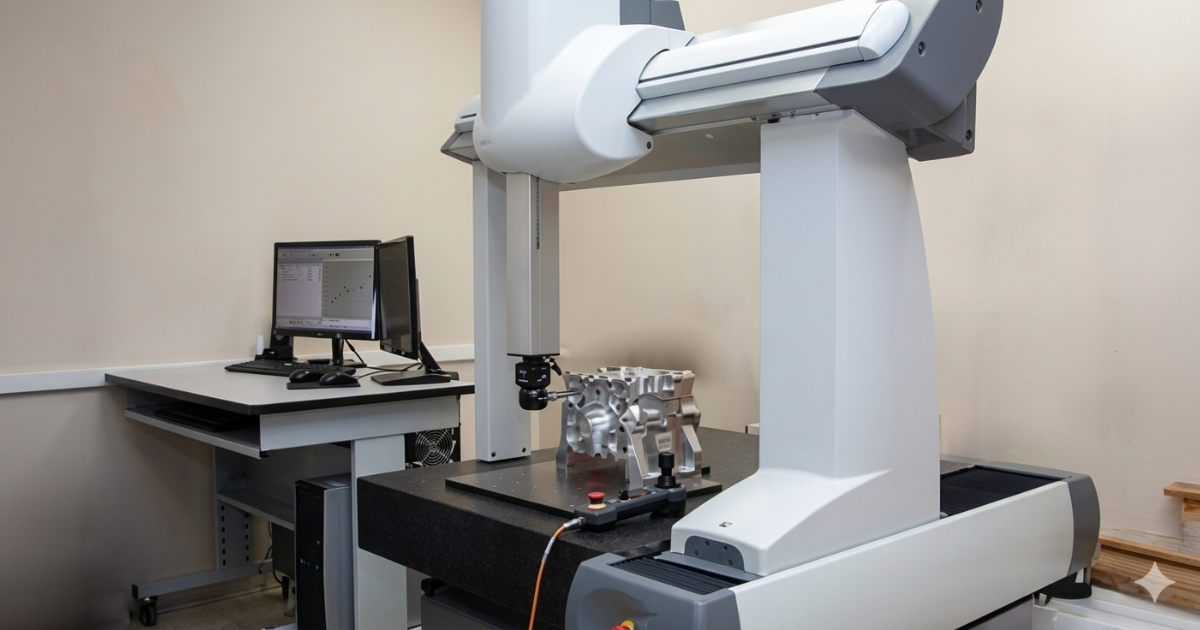
Another highly accurate inspection technology is the Coordinate Measuring Machine, which is commonly used in precision manufacturing. A CMM measures the geometry of a part by using a contact probe that touches specific points on the component surface. This method provides extremely high measurement accuracy, typically in the range of 0.5 to L/500 microns. Because of its precision, CMM inspection is widely used for verifying critical dimensions and performing GD&T analysis. It is considered the industry standard for precision dimensional inspection in aerospace, automotive, and high end manufacturing sectors. Despite its advantages, CMM inspection also has some limitations.
The measurement process can be relatively slow because it collects data point by point rather than capturing the entire surface at once. Proper fixturing and alignment are required before measurement begins, which increases setup time. Additionally, CMM systems may struggle to efficiently measure highly complex or freeform surfaces, and they cannot inspect internal structures within components. Human errors in CMM inspection may arise from incorrect probe selection, improper alignment of the component, errors in measurement programming, or unstable fixturing during the inspection process.
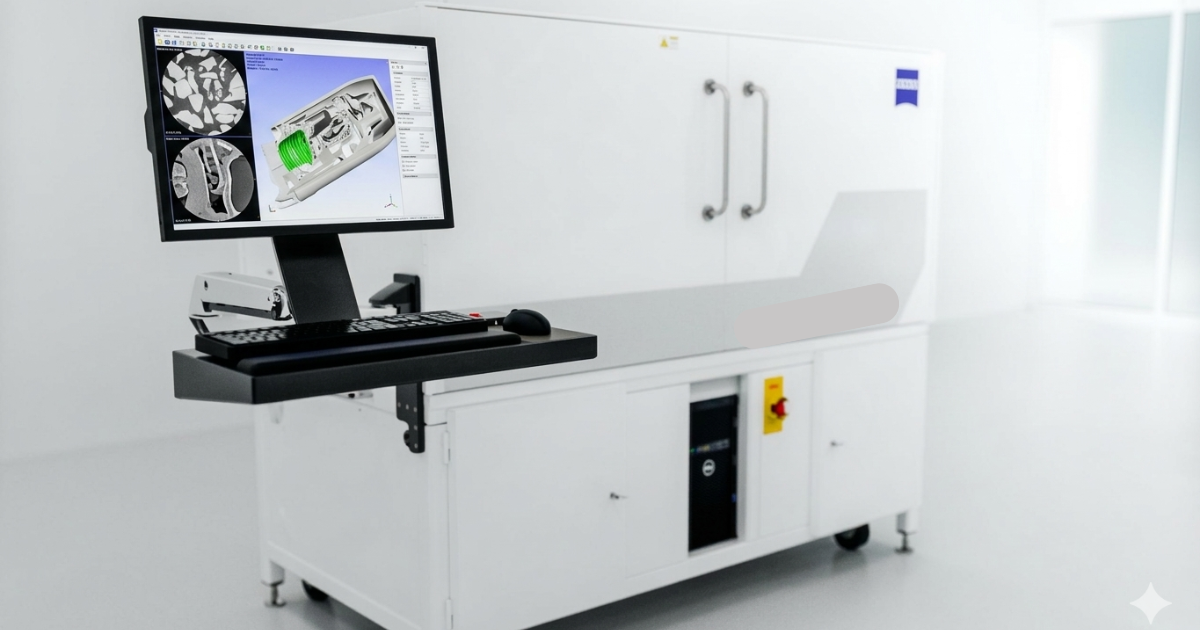
Industrial CT scanning is another advanced inspection technology that enables both external and internal analysis of a component. Based on the principle of computed tomography, this method uses X-rays to generate a complete 3D volumetric model of the part. Unlike traditional inspection techniques, CT scanning allows engineers to examine internal structures without cutting or destroying the component. Typical inspection accuracy for industrial CT systems ranges from approximately 4.5 to L/50 μm depending on part size, material density, and scanning resolution. One of the key advantages of CT scanning is its ability to detect internal defects such as porosity, cracks, voids, and inclusions. It also allows internal dimensional measurement and inspection of hidden channels or complex assemblies.
These capabilities make CT scanning particularly useful for castings, injection molded components, and additive manufacturing parts. However, CT scanning systems are expensive and require significant expertise to operate. The scanning and reconstruction process can also take considerable time, especially for high resolution scans. Large or dense metal parts may present additional challenges due to X-ray penetration limitations. Human errors in CT inspection may occur if the operator uses incorrect scanning parameters, applies improper reconstruction settings, or misinterprets volumetric data during analysis.
Modern manufacturing requires highly reliable inspection systems to ensure that components meet strict dimensional and quality requirements. While traditional inspection methods provide basic measurements, they are often insufficient for complex geometries, tight tolerances, and internal defect analysis. Advanced inspection technologies such as 3D scanning, CMM, and CT scanning offer complementary capabilities that significantly improve accuracy, efficiency, and data reliability. The Coordinate Measuring Machine provides extremely high precision for critical dimensional verification, 3D scanning enables rapid full surface inspection and digital comparison with 3D CAD models, and industrial CT based on computed tomography allows nondestructive evaluation of internal structures and hidden defects. Although each method has its own limitations and potential for human error, when used together they create a comprehensive inspection strategy that enhances product quality, reduces manufacturing risks, and supports advanced industrial production. As manufacturing technologies continue to evolve, integrated digital inspection will play an increasingly important role in achieving higher precision, faster quality control, and improved overall reliability.
© 2026 RA Global Tech Solutions
Site design and developed by Rajkar Global